
The first crêpe usually tells me everything I need to know. Too thick, and I know I used too much batter. Too pale, and the skillet needs more heat.
With this Jacques Pépin Crêpes Recipe, I like how quickly those little details come together. The batter is thin, the crêpes cook in minutes, and the edges turn lightly golden while the center stays soft.
It feels simple once you get the hang of spreading that first crêpe.
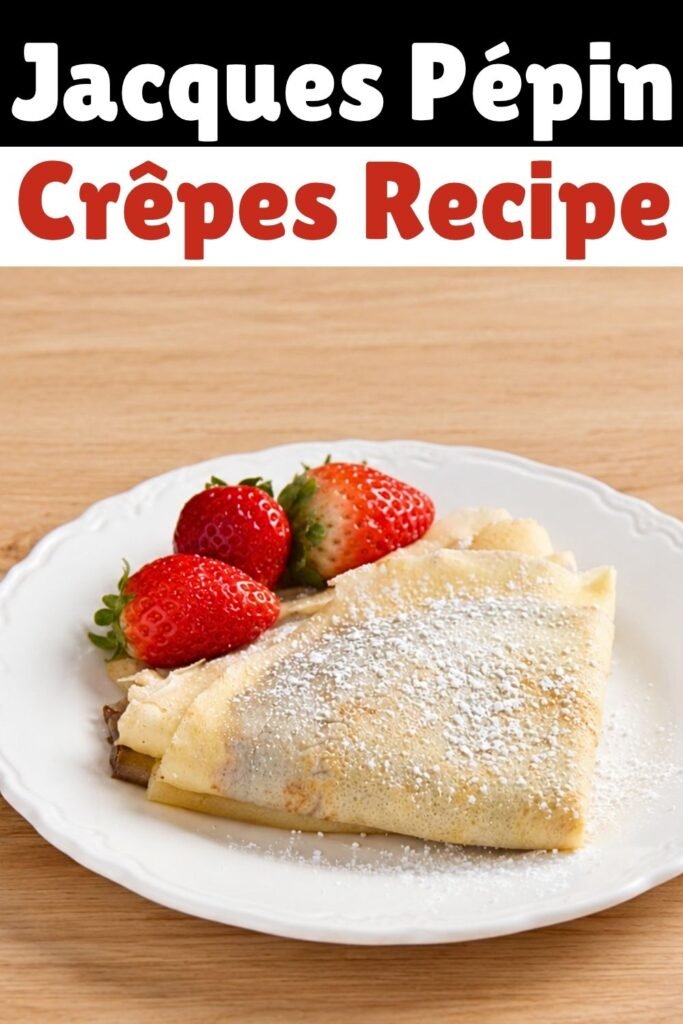
What Makes Jacques Pépin’s Crêpes Easy to Make at Home
What I like about Jacques Pépin’s method is how he makes the batter in stages. Instead of adding all the milk at once, he mixes the flour with part of the milk first.
This creates a smooth base before the rest of the milk goes in.
- Mix the Batter in Stages – Starting with a small amount of milk makes it easier to work the flour into a smooth mixture. Once the flour is fully mixed, the remaining milk goes in to loosen the batter.
- Use a Small Skillet – A 7-inch skillet gives you good control when spreading the batter. The smaller surface makes it easier to create an even, thin crêpe without using too much batter.
- Keep the Batter Very Thin – The finished batter should be loose enough to spread across the pan quickly. This gives the crêpes their thin, soft texture without making them heavy.
- Use One Batter for Sweet or Savory Crêpes – The basic batter works with both sweet and savory fillings. You can keep the crêpes simple with sugar or jam, or fill them with savory ingredients for a meal.
How Thin Should Jacques Pépin-Style Crêpes Be
The batter should pour like heavy cream, and that can feel wrong when you first see it. Pépin even says it could be a little looser, so don’t panic when yours runs off the whisk.
Aim for a crêpe that spreads into one thin, even layer and stays soft enough to bend, not crisp like a wafer.
Three things control this: batter thickness, pan heat, and how much batter you pour. Thick batter or too much of it makes a heavy crêpe. Pan heat counts too, because batter sets the second it touches the hot pan, and that is why you spread it fast.
Jacques Pépin Crêpes Ingredients
I keep the amounts close to the method shown by Jacques Pépin. The balance gives the batter enough liquid to spread fast while still holding together in the pan.
- All-Purpose Flour – Use 1/3 cup all-purpose flour. It gives the batter enough body without making the crêpes heavy. A plain gluten-free blend can also work, though the texture may change slightly.
- Egg – Use 1 large egg. It helps the crêpe hold together and adds color and softness. Keep the egg in this recipe, as changing it can affect the batter balance.
- Milk – Use 1/2 cup milk. Whole milk gives a soft batter, while 2% milk also works well. Unsweetened oat milk can be used as a plain alternative.
- Salt – Use a small dash of salt. It keeps the crêpes from tasting flat. Fine sea salt or table salt both work well.
- Sugar – Use a slightly larger dash of sugar. It adds gentle sweetness and helps the crêpes brown. For savory crêpes, reduce or omit the sugar.
- Butter – Use 1 tablespoon butter. Melt it in the skillet, then mix it into the batter. Neutral oil can replace the butter in the same amount.
- Water – Add a small splash of water to make the batter more fluid. It helps create thin crêpes with delicate edges. Add it gradually to control the batter thickness.
How To Make Jacques Pépin Crêpes Recipe at Home
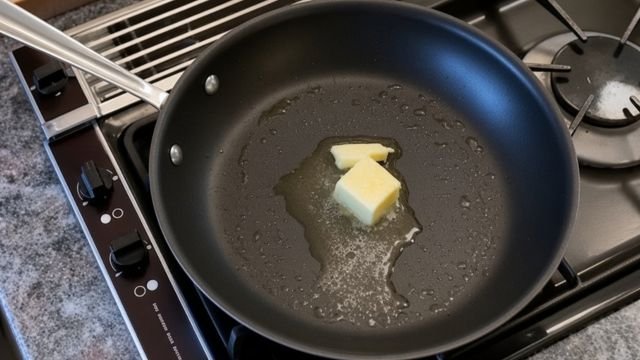
1. Melt the Butter in a 7-Inch Skillet
Set a 7-inch skillet over medium heat and add 1 tablespoon of butter. Let it melt fully, but do not let it brown.
Once melted, pour the butter into a small cup and set it aside for the batter. A little butter left in the skillet will help prevent sticking as you cook the first crêpe.
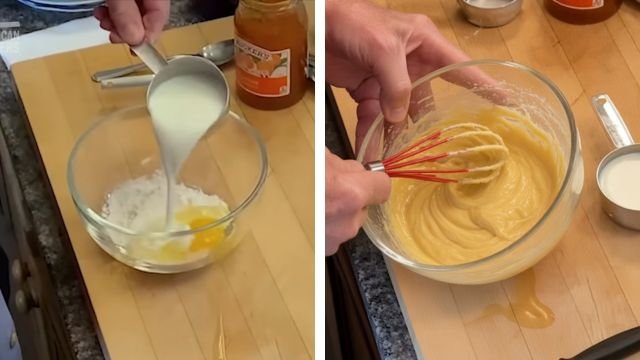
2. Mix the Flour, Egg, and a Little Milk
Add 1/3 cup flour and one egg to a medium bowl. Pour in only a few tablespoons of the 1/2 cup milk.
Add a small dash of salt and a slightly larger dash of sugar. Whisk until the mixture becomes smooth and thick, with no dry flour or visible lumps.
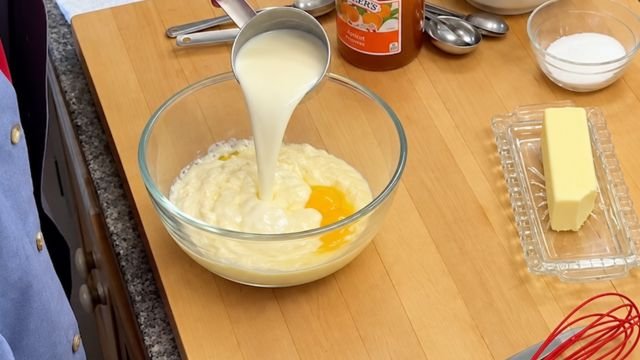
3. Add the Rest of the Milk
Once the flour mixture is smooth, slowly pour in the remaining milk while whisking. The batter should become very thin and easy to pour. It should look closer to light cream than pancake batter.
This thin texture helps the batter spread quickly when it reaches the hot skillet.
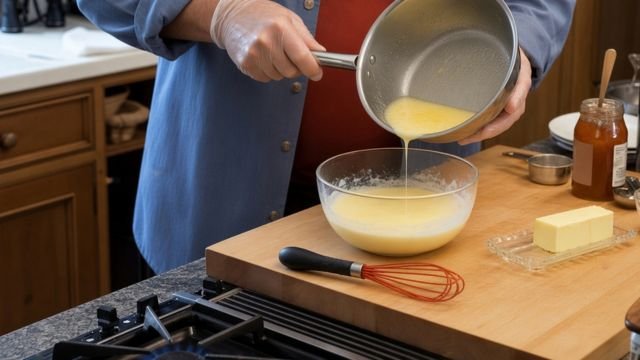
4. Stir in the Melted Butter
Pour the melted butter into the thin batter and whisk until it is fully mixed. At this point, check the texture.
The batter should flow easily from a spoon or whisk. A small splash of water can be added when it seems too thick, but add only a little at a time.
5. Spread the First Crêpe
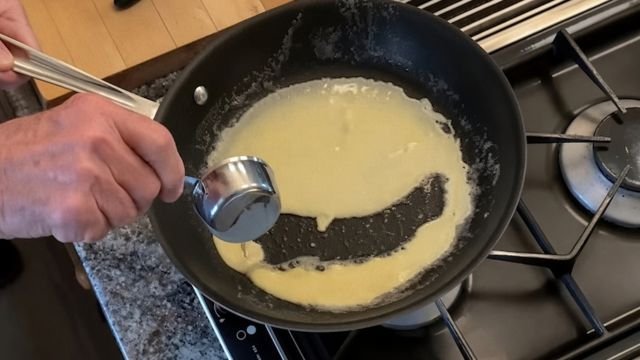
Return the skillet to medium heat. Pour about 1/4 cup of batter near one side of the skillet rather than directly in the center.
Quickly tilt and shake the pan so the batter spreads into a thin, even layer. Work fast because the batter starts setting as soon as it touches the hot surface.
6. Cook and Flip the Crêpe
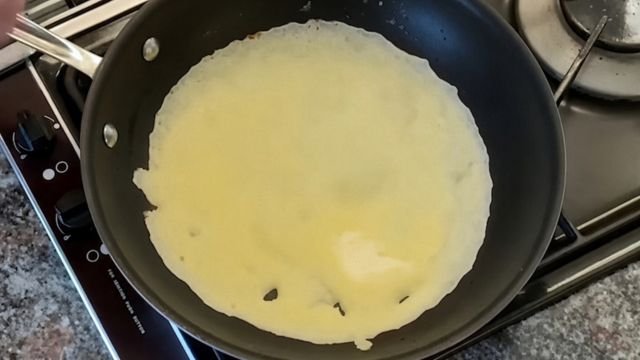
Let the first side cook for about 1 minute. Watch the edges closely. They should look set, and the bottom should have a light golden-brown color.
Slide a thin spatula underneath and gently flip the crêpe. Cook the second side for about 30 seconds, then slide it onto a plate.
7. Cook the Remaining Crêpes and Serve the Pépin Crêpes
Repeat the same process with the remaining batter, using about 1/4 cup for each large crêpe. Cook each one for about 1 minute on the first side and 30 seconds on the second.
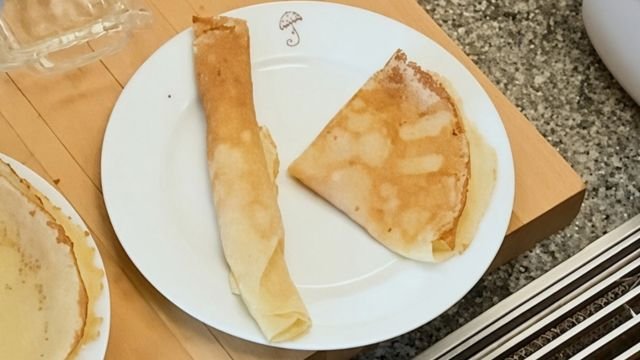
Transfer the finished crêpes to a plate, keeping the browned side facing up. Fold or roll them while they are still warm, then serve right away for the softest texture.
Essential Tips for Light, Delicate, and Golden French Crêpes
A few simple details make thin crêpes easier to cook. These are the main things to keep in mind for an even texture and golden color.
- Keep the batter thin: Thin batter spreads easily and gives delicate crêpes. Add a small splash of water or milk when needed.
- Spread quickly: Pour the batter into the hot pan and spread it right away. The heat sets the batter quickly.
- Control the heat: Medium heat is a good starting point. Lower the heat when the edges brown too quickly or the pan starts to smoke.
- Watch the edges: When the edges look set and lift easily, the crêpe is ready to flip. Cook the second side briefly to prevent drying.
- Show the browned side: When folding or rolling the crêpes, place the better-browned side on top for a more attractive finish.
Serving Ideas for Jacques Pépin Crêpes
At home, I like to keep the first few crêpes simple. That lets us enjoy the soft texture before adding a lot of filling. Once the basic crêpe is ready, there are many easy ways to serve it.
- Apricot jam: Spoon a tablespoon into the center and fold into fourths. It’s a classic, and it tastes like a real French dessert.
- Sugar and butter: Sprinkle sugar over the warm crêpe and add a small piece of butter. It melts right in.
- Grated chocolate: Scatter it on top while the crêpe is warm so it softens a little.
- Rolled up: Roll a filled crêpe instead of folding it. It looks neat on a plate.
- Sugar on top: A light sprinkle is enough for a quick, cheap dessert.
Make Jacques Pépin Crêpes Ahead of Time
Make the Crêpe Batter Ahead – You can whisk the batter, cover the bowl, and keep it in the refrigerator for up to a day. Stir it well before cooking, since the flour can settle at the bottom.
If the batter feels thicker after chilling, add a small splash of milk until it pours like cream again.
Even with a simple batter, a crêpe or two went wrong for me, and pan heat was usually the cause.
Common Crêpe Problems and How to Fix Them
Following the steps closely helps a lot, but sometimes you may still run into a problem. Here are the common ones and how to fix them.
Crêpe tears when flipped: It’s usually too delicate, undercooked, or very thin. Cook it a little longer so the bottom sets and turns golden. Then handle it gently, sliding a spatula fully under the crêpe before you turn it.
Crêpe sticks: The pan may not have enough grease, or the heat may be off. Adjust the burner first. If the pan still grabs, wipe in a tiny bit of butter, then cook the next crêpe as usual.
Crêpe is rubbery: Too much flour, overmixing, and overcooking are the usual causes. Measure the flour carefully and whisk only until smooth. Thin the batter a little if needed, and pull each crêpe once it turns lightly golden.
Crêpe is too thick: This happens when you pour too much batter or the batter is too heavy. Stir in a little extra liquid until it runs easily, and use less batter, just enough to coat the pan in a thin layer.
Crêpe is too eggy: An eggy taste shows up when there’s too much egg compared with the flour and milk. Check your measurements: one egg to 1/3 cup flour and 1/2 cup milk. Keep that ratio, and the flavor stays mild.
How to Store and Freeze Crêpes
I prefer to let cooked crêpes cool before packing them away. Warm crêpes trapped in a sealed container can create moisture, which can make the surface damp and sticky.
Refrigerator Storage – Cool the crêpes fully on a plate or rack. Stack them neatly and cover them in an airtight container or wrap them well. Refrigerated crêpes are easiest to use within a 3 days. Keep them away from foods with strong odors.
Freeze Crêpes – For longer storage, stack the cooled crêpes with a sheet of parchment or wax paper between each one. Wrap the stack securely, then place it in a freezer-safe bag or container. Press out extra air before sealing.
Keep Frozen Crêpes From Sticking Together – The paper separators are worth the small extra effort. Place one sheet between every crêpe before freezing. That way, you can remove only the number you need instead of thawing the whole stack.
Reheat Crêpes Without Drying
Thin crêpes warm very quickly, so gentle heat works better than a long cooking time.
- Skillet – Place one crêpe in a dry skillet over low to medium-low heat. Warm it for about 20 to 30 seconds per side. Add a tiny amount of butter when needed, but avoid cooking it long enough to make the edges crisp.
- Microwave – Place one or two crêpes on a microwave-safe plate and cover them with a slightly damp paper towel. Heat for about 10 to 15 seconds, then check them. Add another short burst when needed so they stay soft.
- Oven – For several crêpes, place them in a covered baking dish and warm them at about 300°F. Heat for roughly 10 minutes. Keeping the dish covered helps hold in moisture and keeps the thin crêpes from drying out.
Jacques Pépin Crêpes Recipe FAQs
These questions come up often when making very thin crêpes. I have kept the answers focused on the small details that can change the final texture and make cooking easier.
1. Which side of the crêpe should face out?
The side that cooks first is the nicer side, with better browning. Pépin flips each crêpe so that side ends up facing up on the plate. When you fold it into fourths, that pretty side shows on the outside. The second side cooks for only about 30 seconds, so it stays paler and is better kept hidden inside the fold.
2. Why do some crêpes have tiny holes like lace?
Tiny holes show up when the batter is very thin. Pépin adds a little water to loosen it, and the edges turn lacy as the crêpe cooks.
These are called lacy crêpes, and they’re still great to eat. Just handle them gently when you flip, since a thinner crêpe tears more easily than a thicker one.
3. Do I need a nonstick skillet for these crêpes?
A nonstick pan makes life easier, mostly for the first crêpe. A well-seasoned cast iron pan also works, but it takes longer to heat up. Give it a few minutes, then watch the first crêpe closely.
4. What’s the difference between crêpes and pancakes?
Crêpes use a very thin, pourable batter, so they cook flat in about a minute and stay soft and bendable.
Pancakes use a thicker batter with baking powder, which makes them puff up. A crêpe is closer to a thin, golden wrapper that you fold around jam or sugar.
5. Can I make the batter in a blender?
You can, and it works fine if you’re short on time. Add the milk, egg, flour, salt, sugar, and melted butter, then blend for about ten seconds.
Pépin uses a whisk, and so do I, because it’s one less thing to wash. If you blend, scrape down the sides so no flour hides there.
6. What if my crêpes keep tearing?
Tearing usually means the crêpe is too thin or undercooked. Let the first side cook a bit longer. The surface should look matte, not wet. Use a thin, flexible spatula. Slide it under gently.
If the batter is too thin, whisk in a tablespoon of flour. If the pan is too hot, the crêpe sets too fast and becomes brittle. Lower the heat slightly. Practice makes perfect here. The first few might tear. That’s normal.
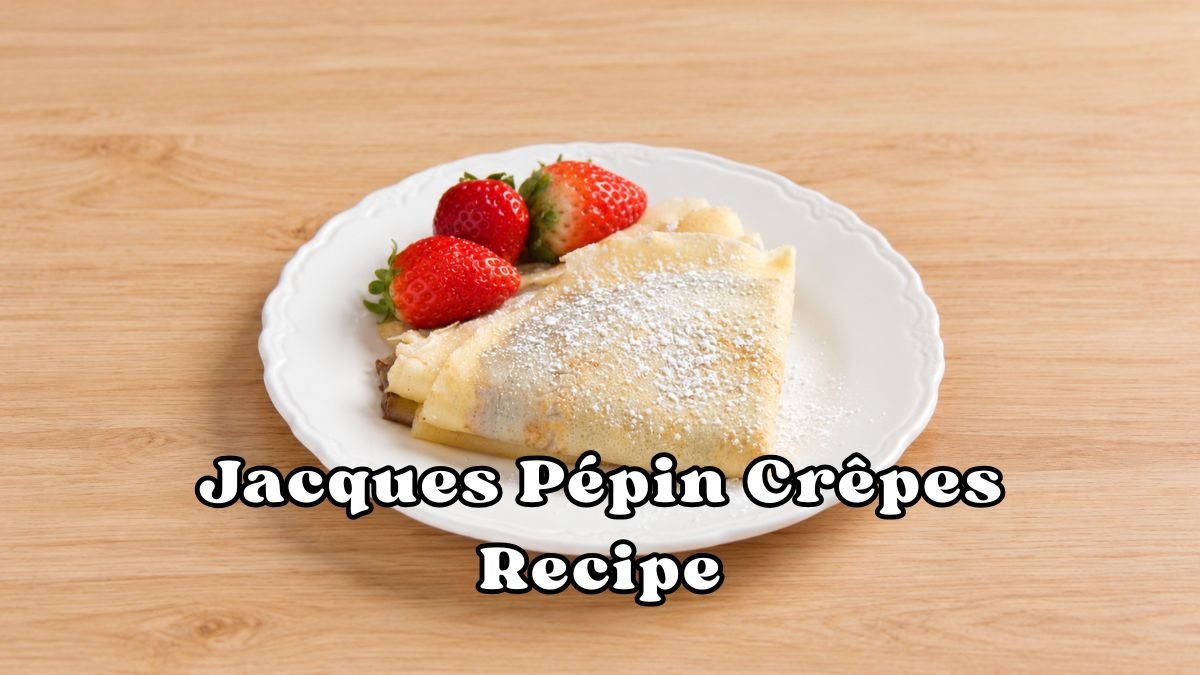
Jacques Pépin Crêpes Recipe
Ingredients
Method
- Melt the butter: Place a 7-inch skillet over medium heat. Add 1 tablespoon butter and let it melt without browning. Pour the melted butter into a small cup, leaving a little in the skillet to help prevent sticking.
- Make the base: In a medium bowl, combine 1/3 cup flour and 1 egg. Add a few tablespoons of the milk, along with the salt and sugar. Whisk until completely smooth and no dry flour remains.
- Add the remaining milk: Slowly whisk in the rest of the 1/2 cup milk. Continue whisking until the batter becomes very thin and pourable, similar to light cream.
- Add the butter: Whisk the melted butter into the batter. Add a small splash of water when needed to loosen the batter. The finished batter should flow easily from a spoon or whisk.
- Cook the first crêpe: Return the skillet to medium heat. Pour about 1/4 cup batter near one side of the skillet. Quickly tilt and shake the skillet so the batter spreads into a thin, even layer.
- Cook the first side: Cook for about 1 minute, watching the edges. They should look set and the underside should be lightly golden.
- Flip: Slide a thin spatula underneath the crêpe and gently turn it over. Cook the second side for about 30 seconds.
- Finish the remaining crêpes: Transfer the cooked crêpe to a plate and repeat with the remaining batter. Use about 1/4 cup batter for each crêpe.
- Serve: Keep the browned side facing up. Fold or roll the crêpes while warm and serve immediately for the softest texture.